

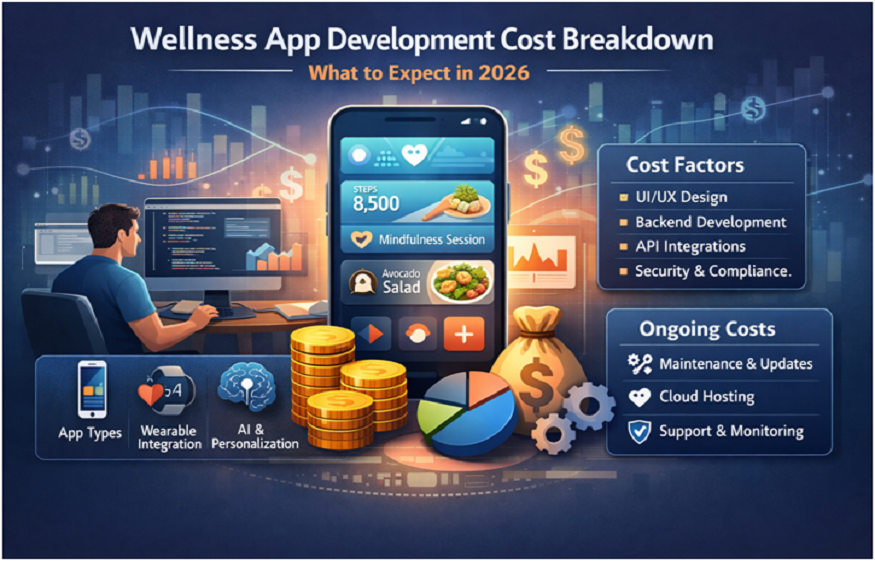
The global demand for digital health and wellness solutions is rising rapidly as users become more health-conscious and technology-driven. From fitness tracking and mental health support to nutrition planning and corporate wellness platforms, wellness apps are no longer optional—they are strategic digital products. For businesses planning to enter this market, understanding the wellness app development cost breakdown in 2026 is essential for accurate budgeting, ROI planning, and long-term scalability.
In 2026, wellness app development costs are influenced by advanced technologies, higher user expectations, stricter data privacy regulations, and the need for personalized experiences. This article provides a detailed, transparent breakdown of what businesses should expect to invest when building a wellness app and how working with a reliable wellness app development company can help optimize costs without compromising quality.
Key Factors That Influence Wellness App Development Cost in 2026
App Type and Wellness Category
The overall cost heavily depends on the type of wellness app being developed. Different categories require different levels of complexity, integrations, and compliance.
Fitness and activity tracking apps require sensor integrations, real-time data processing, and performance analytics. Mental wellness apps often include guided sessions, AI-powered chat support, and secure content delivery. Nutrition and diet planning apps need databases, personalization algorithms, and third-party integrations. Corporate wellness platforms demand multi-user roles, admin dashboards, analytics, and enterprise-level security.
Each category adds layers of development effort, directly impacting the total cost.
Platform Selection: iOS, Android, or Cross-Platform
Developing a native app for iOS or Android involves separate codebases, increasing development time and cost. Cross-platform development using modern frameworks can reduce initial expenses but may require additional optimization for performance-intensive features like real-time tracking or AI-driven personalization.
In 2026, businesses often choose a hybrid approach—launching cross-platform initially and later investing in native optimization as user adoption grows.
Feature Complexity and Functional Scope
The number and sophistication of features significantly affect development cost. Basic wellness apps may include user registration, activity tracking, dashboards, and notifications. Advanced apps introduce AI-driven recommendations, wearable device integration, teleconsultation features, gamification, and real-time health insights.
As feature complexity increases, so does the need for experienced developers, testers, and architects, making feature planning a critical cost-control step.
Detailed Cost Breakdown by Development Stage
Market Research and Product Discovery Costs
Before development begins, businesses must invest in research to validate the idea, define user personas, and analyze competitors. This stage includes market analysis, requirement gathering, and feature prioritization.
In 2026, this phase typically accounts for a moderate but essential portion of the budget. Skipping or underestimating research often leads to costly rework later.
UI/UX Design and User Experience Engineering
Wellness apps rely heavily on intuitive design, accessibility, and user engagement. UI/UX design includes wireframes, user flows, interactive prototypes, visual branding, and usability testing.
Modern wellness apps are expected to offer personalized experiences, calming interfaces, and seamless navigation. This design depth requires skilled designers and iterative testing, making UI/UX a notable cost component.
Frontend and Backend Development Costs
Frontend development focuses on building user-facing interfaces, animations, and interactions. Backend development includes server logic, databases, APIs, authentication systems, and admin panels.
In 2026, backend systems are more complex due to real-time data processing, AI integration, and scalability requirements. Businesses working with professional wellness app development services often allocate a significant portion of their budget to ensure backend reliability and future scalability.
Third-Party Integrations and APIs
Most wellness apps rely on external services such as payment gateways, wearable device APIs, health data platforms, video streaming tools, and analytics services.
Each integration requires development effort, testing, and ongoing maintenance. Licensing or usage fees for premium APIs also add to long-term operational costs.
Compliance, Security, and Data Privacy Implementation
Wellness apps handle sensitive personal and health data, making security and compliance non-negotiable. In 2026, regulations related to data protection, consent management, and health information security are stricter than ever.
Implementing encryption, secure authentication, role-based access, audit logs, and compliance frameworks increases development effort but protects businesses from legal and reputational risks.
Advanced Technologies That Increase Development Costs
Artificial Intelligence and Personalization Engines
AI-powered features such as personalized workout plans, mental health insights, and predictive health analytics significantly enhance user value. However, they require data modeling, algorithm development, and continuous optimization.
AI implementation adds both initial development costs and ongoing expenses for model training and improvement.
Wearable and IoT Device Integration
Connecting wellness apps with smartwatches, fitness bands, and health sensors requires specialized integrations and extensive testing. Ensuring accuracy, synchronization, and battery efficiency adds to development time and cost.
Cloud Infrastructure and Scalability Planning
Modern wellness apps are built for scale, using cloud-based infrastructure to handle user growth, data storage, and real-time analytics. Cloud architecture design, deployment, and optimization are essential cost components that support long-term performance.
Post-Launch and Ongoing Costs Businesses Must Consider
App Testing and Quality Assurance
Thorough testing ensures performance stability, data accuracy, and security. This includes functional testing, performance testing, security audits, and compatibility testing across devices and operating systems.
In 2026, automated and manual testing together form a critical cost segment to maintain user trust.
App Store Deployment and Compliance Updates
Publishing apps requires adherence to platform-specific guidelines and periodic updates. Compliance changes, OS updates, and feature enhancements require continuous development support.
Maintenance, Support, and Feature Enhancements
Post-launch maintenance typically includes bug fixes, server monitoring, performance optimization, and user feedback-driven improvements. Many businesses partner with a long-term wellness app development company to manage these recurring costs efficiently.
Estimated Wellness App Development Cost Range in 2026
A basic wellness app with limited features may require a lower six-figure investment. Mid-level apps with personalization, integrations, and analytics fall into a higher range. Advanced wellness platforms with AI, IoT, and enterprise features demand a significantly larger budget.
Exact costs vary based on scope, region, team expertise, and technology stack, but a well-defined roadmap helps avoid unexpected expenses.
How Businesses Can Optimize Development Costs Without Sacrificing Quality
Strategic planning, MVP-based development, and phased feature rollouts help control costs. Choosing the right technology stack and partnering with experienced wellness app development services ensures efficient development and future scalability.
Businesses should focus on core value-driven features first and expand based on real user data rather than assumptions.
Conclusion
In 2026, wellness app development is a high-potential investment that requires careful financial planning and technical foresight. The total cost depends on app category, feature complexity, technology choices, compliance requirements, and post-launch support. By understanding each cost component and working with an experienced wellness app development company, businesses can build scalable, secure, and user-centric wellness apps that deliver long-term value and competitive advantage.
FAQs
What is the average cost to develop a wellness app in 2026?
The average cost varies widely depending on features, technology, and compliance requirements. Simple apps cost significantly less than advanced AI-driven or enterprise wellness platforms.
How long does it take to develop a wellness app?
Development timelines typically range from a few months for basic apps to over a year for complex, feature-rich platforms with AI and wearable integrations.
Are wellness apps required to follow health data regulations?
Yes, most wellness apps must comply with data protection and privacy regulations, especially if they handle personal or health-related data.
Can businesses reduce costs by launching an MVP first?
Launching an MVP is one of the most effective ways to reduce initial investment, validate the idea, and gather real user feedback before scaling.
Why should businesses hire professional wellness app development services?
Professional services provide technical expertise, regulatory knowledge, scalable architecture, and long-term support, reducing risks and ensuring a higher-quality product.