

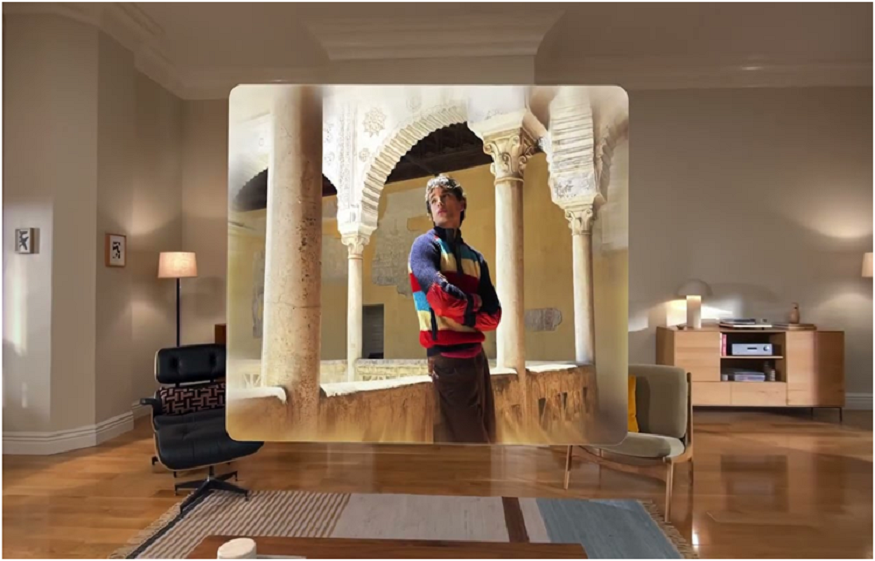
Spatial computing is evolving fast, and developers building for visionOS 26.4 are stepping into a new era of performance optimization. One of the most transformative techniques available today is foveated streaming. This approach intelligently prioritizes rendering quality based on where the user is looking, reducing bandwidth use while improving visual fidelity where it matters most.
If you are developing immersive applications for devices like the Apple Vision Pro, understanding how to implement foveated streaming in visionOS 26.4 is essential. Not only does it enhance performance, but it also supports better battery life, smoother interactions, and stronger Data security solutions across cloud-rendered experiences.
In this guide, we will break down how developers implement foveated streaming in visionOS 26.4, step by step, while keeping the focus on performance, architecture, and security.
Understanding Foveated Streaming: Rendering That Thinks Like the Eye
Before diving into implementation, it is important to understand the concept. Foveated rendering mimics how the human eye works. The fovea is the central part of the retina responsible for sharp vision. Meanwhile, peripheral vision is naturally less detailed.
Foveated streaming takes advantage of this biological fact. Instead of rendering the entire frame in ultra-high resolution, the system renders only the region the user is directly looking at in high detail. The rest of the frame receives reduced resolution. As a result, developers reduce GPU load, network bandwidth, and latency without sacrificing perceived quality.
In visionOS 26.4, this concept becomes even more powerful when combined with cloud rendering pipelines. Developers can stream immersive environments while dynamically adjusting resolution based on real-time eye-tracking data. Consequently, performance scales more intelligently across different hardware profiles.
Eye-Tracking Integration in visionOS 26.4
Foveated streaming depends on accurate gaze tracking. Fortunately, devices running visionOS, including Apple Vision Pro, provide precise eye-tracking APIs.
Developers access gaze data through visionOS frameworks that deliver real-time eye position vectors. First, they subscribe to gaze updates within the spatial session. Then, they translate those coordinates into viewport regions. Finally, they adjust rendering priorities accordingly.
However, developers must also handle latency carefully. Since gaze data updates continuously, even small delays can cause visible artifacts. Therefore, many teams implement predictive gaze models. These models estimate where the user will look in the next few milliseconds, ensuring smooth transitions between high-resolution and peripheral zones.
At this stage, integrating Data security solutions becomes critical. Eye-tracking data is sensitive biometric information. Developers must encrypt gaze data streams, especially when transmitting to cloud rendering servers. Secure transport layers and end-to-end encryption ensure compliance and user trust.
Configuring the Rendering Pipeline for Variable Resolution
Once gaze data is available, developers configure the rendering engine to support multiple resolution tiers. In visionOS 26.4, this often involves:
- Defining a high-resolution foveal region
- Creating one or more mid-resolution rings
- Setting a low-resolution peripheral region
Using Metal and visionOS rendering frameworks, developers adjust shading rates dynamically. For instance, they assign higher shading rates to the gaze region while reducing sample density in peripheral areas.
Moreover, developers implement dynamic foveal region scaling. When a user moves their head rapidly, the system temporarily enlarges the high-resolution zone to prevent blur artifacts. After stabilization, the zone contracts again to optimize performance.
This adaptive strategy ensures that visual quality remains consistent while minimizing computational overhead.
Implementing Cloud-Based Foveated Streaming Architecture
While local rendering works well, many advanced applications rely on cloud rendering to deliver complex 3D environments. In such cases, foveated streaming requires coordination between the client device and remote servers.
The process typically follows these steps:
- The client captures gaze data.
- It transmits foveal region coordinates to the server.
- The server renders frames with prioritized resolution.
- The server encodes the frame using region-based compression.
- The client decodes and displays the optimized stream.
Developers must minimize round-trip latency. Therefore, they use edge computing nodes close to end users. Additionally, modern video codecs such as region-of-interest encoding help preserve sharpness in the foveal area while compressing peripheral zones more aggressively.
Data security solutions are especially important here. Because streaming often occurs over public networks, developers implement secure authentication, encrypted video channels, and token-based access control. This ensures that immersive enterprise or healthcare applications remain protected.
Optimizing Network Bandwidth and Latency
Foveated streaming significantly reduces bandwidth usage. However, developers still need to manage network variability. visionOS 26.4 provides networking enhancements that support adaptive streaming logic.
Developers use dynamic bitrate adaptation. If network speed drops, the system reduces peripheral resolution first, preserving clarity in the gaze region. This layered approach ensures that the most important visual area remains sharp.
In addition, predictive buffering helps maintain smooth playback. Instead of buffering entire frames uniformly, developers buffer high-resolution gaze zones with priority. As a result, the user perceives consistent clarity even under unstable network conditions.
Moreover, integrating Data security solutions at the transport layer ensures that performance optimization does not compromise privacy. Encrypted adaptive streaming prevents packet inspection attacks and protects intellectual property embedded in 3D assets.
Managing Power Efficiency and Thermal Constraints
Spatial computing devices require efficient energy management. High-resolution rendering drains battery and generates heat. Therefore, foveated streaming also plays a role in thermal optimization.
By lowering GPU demand in peripheral regions, developers reduce overall system load. This not only extends battery life but also stabilizes device temperature. visionOS 26.4 includes system-level performance monitoring tools that allow developers to track GPU usage, CPU load, and thermal metrics in real time.
Furthermore, developers can adjust foveal radius dynamically based on battery level. For example, when battery drops below a certain threshold, the system slightly reduces the high-resolution area while maintaining user experience quality.
This intelligent resource balancing makes foveated streaming essential for long immersive sessions.
Testing and Debugging Foveated Streaming in visionOS 26.4
Implementation is only half the battle. Developers must rigorously test their foveated streaming setup across different scenarios.
First, they simulate rapid gaze shifts. Quick eye movements should not produce flickering or visible resolution boundaries. Second, they test various lighting conditions, as brightness changes can affect perceived clarity in peripheral areas.
Additionally, developers conduct latency stress tests. They simulate high-latency networks to evaluate how quickly the system adapts resolution zones. Profiling tools within visionOS help identify frame timing inconsistencies and shading bottlenecks.
Security testing also matters. Developers validate encryption protocols, secure APIs, and access permissions. Since cloud-based rendering often involves enterprise content, Data security solutions must undergo penetration testing and compliance checks.
Real-World Use Cases: Gaming, Enterprise, and Medical Applications
Foveated streaming in visionOS 26.4 opens opportunities across industries.
In gaming, developers deliver hyper-detailed environments without overwhelming hardware. Complex scenes render smoothly because only the focal area receives maximum detail. As a result, players experience immersive realism without lag.
In enterprise collaboration tools, remote design reviews become more efficient. Architects and engineers can inspect detailed 3D models streamed from powerful cloud servers. Meanwhile, peripheral areas remain optimized to conserve bandwidth.
Medical visualization also benefits significantly. Surgeons reviewing 3D scans require precision in specific regions. Foveated streaming ensures that those regions remain crystal clear while reducing unnecessary data transmission.
Across all these use cases, strong Data security solutions ensure that sensitive models, medical records, and proprietary designs remain protected.
Best Practices for Future-Proof Development
As spatial computing evolves, developers should follow a forward-looking strategy when implementing foveated streaming.
First, design modular rendering architectures. Separate gaze tracking, rendering logic, and networking layers. This modular approach simplifies updates as visionOS continues to evolve.
Second, integrate scalable cloud infrastructure. Use distributed rendering nodes to reduce latency across global users. Third, maintain compliance standards by embedding Data security solutions directly into the application lifecycle rather than adding them later.
Finally, monitor user feedback continuously. Foveated streaming is highly perceptual. Even minor artifacts can break immersion. Therefore, iterative optimization remains critical.
Conclusion
Foveated streaming in visionOS 26.4 is more than a performance enhancement. It is a strategic design approach that aligns rendering logic with human vision. By prioritizing gaze-based detail, developers reduce computational load, conserve bandwidth, and deliver smoother immersive experiences.
When combined with secure cloud infrastructure and strong Data security solutions, this technique enables enterprise-grade spatial applications that remain efficient and protected.
As spatial computing continues to mature, foveated streaming will likely become a standard component of immersive development. Developers who master it today position themselves at the forefront of next-generation application design.